Culinary art is just that - art. It’s a creative process that begins with ingredients and transforms food from sustenance to a culinary experience. It is the chef’s drive to create the perfect first bite, utilizing all the senses.
Part One of this series described how educators can develop students’ creativity and inspiration and translate those ideas from paper to applications within an organizing framework.
Part Two describes several multisensory dishes curated by professional chefs that had guests raving and craving for more. These success stories illustrate how a dish layered with flavor is one-dimensional; it’s good but it might not be great. Moving to the next level involves more than just the sense of taste.
Curating the perfect multisensory bite
A chef’s culinary talent comes into play when moving from paper to the kitchen in recipe ideation. This is the stage where creative ideas meet skills; where art and alchemy meld.
Instructors teaching this end-stage of recipe development should reinforce how a memorable, surprised and delighted first bite can connect with up to six sensory areas, (the sixth is the brain).
Here is a recap of the sense areas:
- Texture/mouthfeel – touch
- Sight of the plate – visual
- Flavor – taste
- Crunch in the mouth – hearing
- Plate aroma – smell
- Juxtaposition – engaging the brain with surprise
Case studies
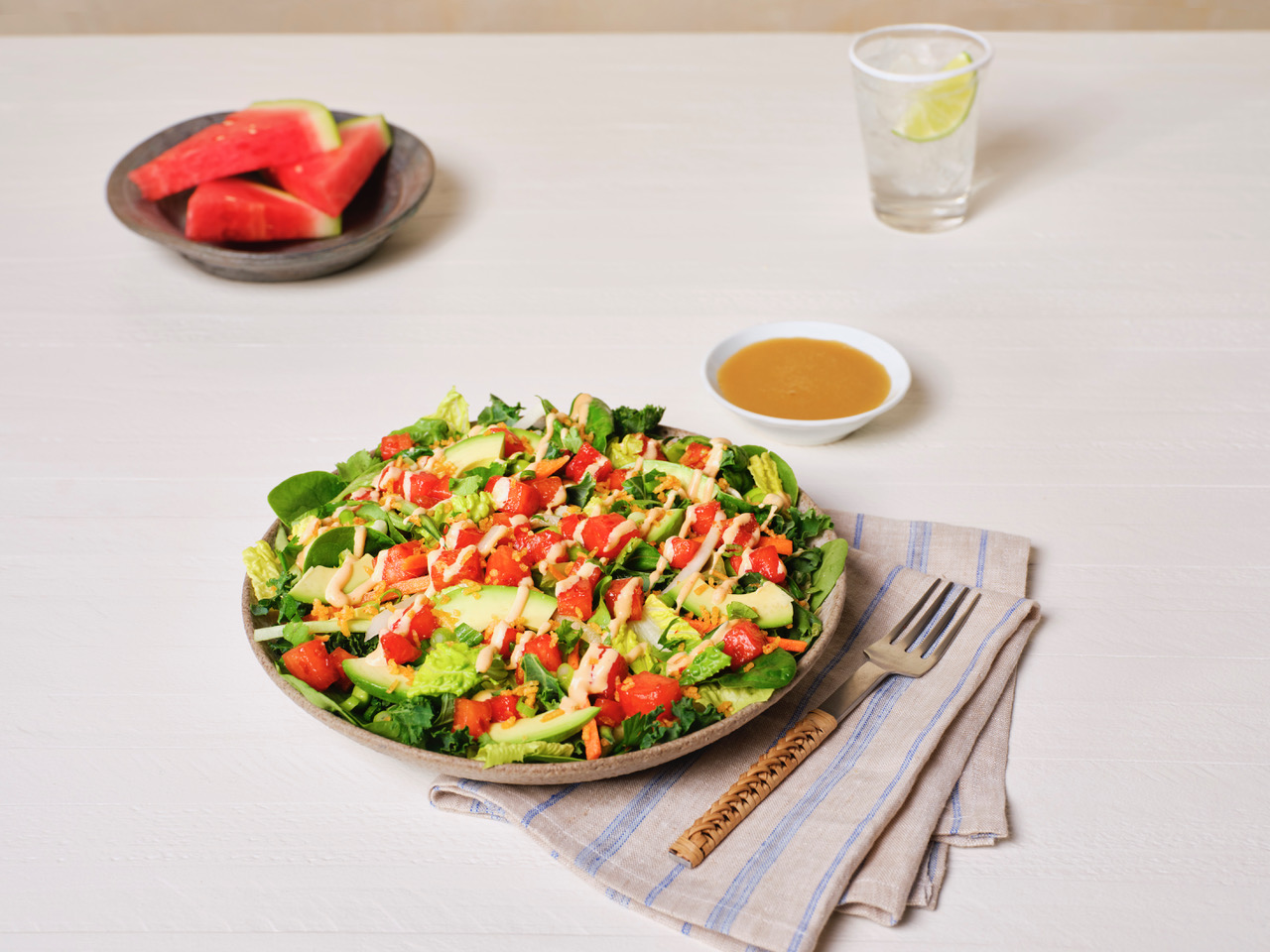 Mendocino Farms Corporate Executive Chef Jeremy Bringardner decided to surprise guests with a savory watermelon poke bowl. “The Watermelon ‘Poke’ Salad was developed as a playful, plant-based take on traditional poke — capturing its vibrant flavor and visual appeal in a new way. We wanted to celebrate watermelon — one of the great iconic summertime delights — by featuring it in a way people wouldn’t expect,” he said.
However, beyond the juxtaposition of watermelon and tuna, the dish’s flavor profile, the density of the vegetables and silky mouthfeel pulled more senses into the experience. “The deep red color and fleshy texture (of watermelon) mimicked the look of raw tuna, but it was when we tasted it alongside the other components that it really clicked — the savory watermelon ‘poke’ against the crunchy vegetables, crispy rice, and creamy sriracha aioli created a very craveable textural contrast,” he said. Mendocino Farms consumers were surprised and immediately connected with the dish, according to Chef Bringardner.
First Hospitality’s Tiffany Swayer engaged the consumer’s brain with surprise when she selected Idaho potatoes for her Vegetable Sushi Roll. Although the dish looks like a traditional seafood sushi roll, the tuna is tomato and Idaho mashed potatoes pose as wasabi. The dish’s flavor profile is similar to sushi but the execution is very different. 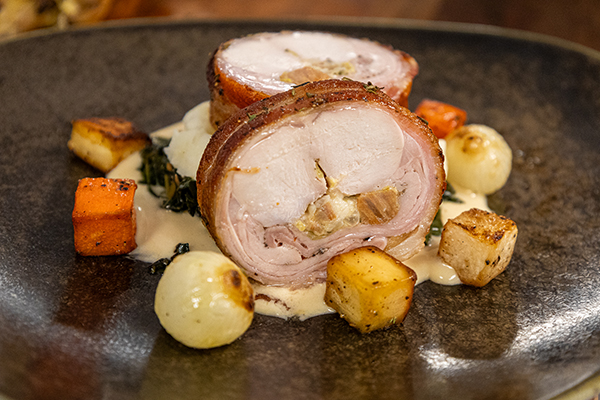
Another tactic of surprise is using unusual ingredients to spark consumers’ interest. Rabbit is not a mainstream ingredient in the US, although both China and Egypt frequently consume the nutritious meat. Chef Daniel Pliska, CEC, AAC, chef instructor at Ozarks Technical College in Springfield, Mo., teaches a class on game that includes the fabrication and cooking of rabbit. His Roasted Rabbit Saddle Stuffed with Creamed Nappa Cabbage, Leeks and Pancetta, bound with California Fontina Cheese, illustrates a carefully curated application that focuses on taste, mouthfeel, aroma and unusual plating, in addition to featuring an unfamiliar protein – a true multisensory application.
Chef Pliska said, “The artistic presentation, along with sublime flavors and mouth feel, creates a very unique dish.” He explained how the rabbit cooked with wrapped bacon had a slightly smoky aroma. He then stacked the rabbit on the plate for visual appeal, created a stuffing with a creamy savory mouthfeel, presented it on bitter braised kale and root vegetables and finished it with a unique matte and glossy, slightly sour mustard cream sauce made with a 40% butter fat Real California heavy cream. “This higher degree of fat offsets the lean, somewhat dry meat of the rabbit,” he explained.
“In my capstone restaurant operations class lecture, I tell my students that taste is ‘king’ and presentation is ‘queen.’ I show my students how to use a grid system to describe the dish in its ideation phase. The dish can be refined and changed to yield the best multisensory results as each aspect is cooked and evaluated.”
Here is Chef Pliska’s grid system utilizing the rabbit application:
| Protein | Sauce | Garnish | Starch | Vegetable 1 | Vegetable 2 |
| Rabbit saddle wrapped with bacon | Mustard cream | Roasted root veg and pearl onions | Mashed potatoes with parsnips | Cabbage and leek stuffing | Quick braised kale |
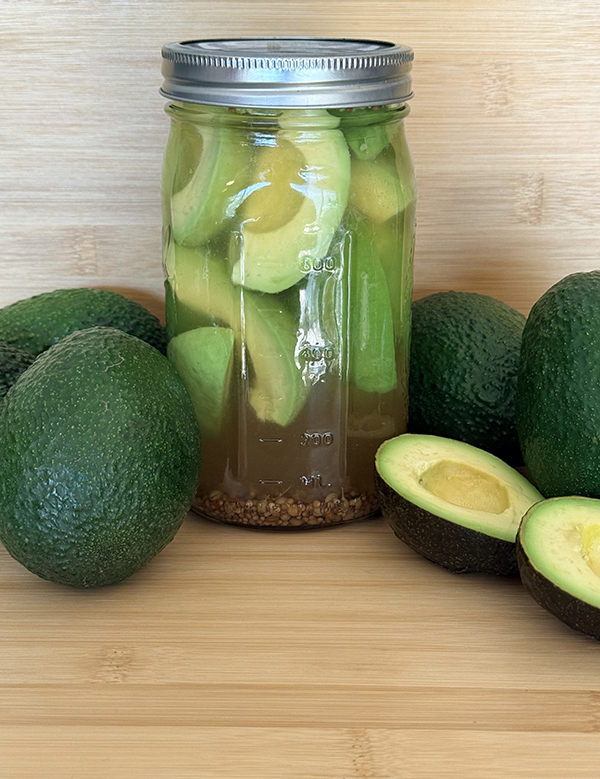 Aneesha Hargrave, executive chef for the California Avocado Commission, discussed her ideas around creating an avocado-stuffed flatbread topped with a salad and finished with pickled avocados. “I wanted layered flavors, spices and textures to create a bomb,” she said.
Her dish also used a familiar ingredient in a surprising manner. People are most familiar with avocado slices or mashed in guacamole. However, it does not occur to most to bake a soft avocado or pickle a firm one.
Her goal was to stun the brains of her consumers with a first bite so delicious that they just had to stop. “I wanted their brain not to know what to do with the first bite. To be blissfully happy and that there is no other thought than to take another bite. Then, after the second bite, they start asking questions.” And through careful planning and execution, that is exactly how the diners reacted to her newly created application.
Research and Development Chef Henry Hill, owner of Hill’s Research Kitchen, worked with the Almond Board of California to showcase almonds as a platform for new product development across baking, snacking, dairy alternatives, and confections in both foodservice and retail. He created two multisensory applications that have consumers understanding and appreciating the versatility of almonds.
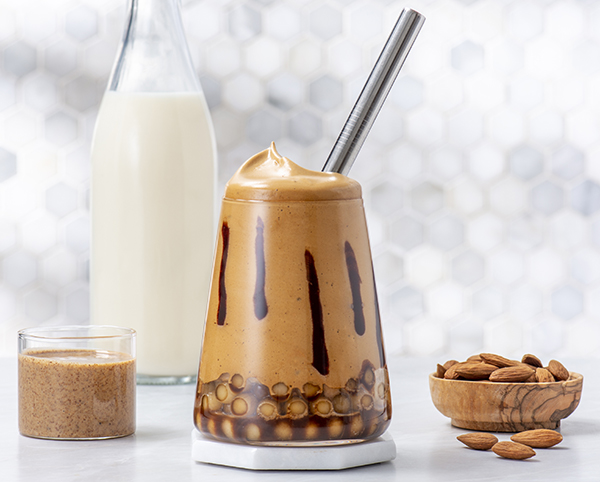 “I think of the Whipped Coffee with Almond Milk and Almond Butter as a multilayer experience (that finishes) with a treasure hunt,” Hill explained. He created a non-dairy drink with layers of texture from the fat of the almond butter to the thick chocolate drizzle down to chewy boba on the bottom. He added the dalgona coffee element, a foamy coffee confection that sweetly sits on top of the drink, that, because of the almond milk fat, moves the sweet first taste to the back of the throat. It also gives consumers a sweet aroma as they begin drinking the beverage. Visually, the drink is very appealing and it can be served hot or cold.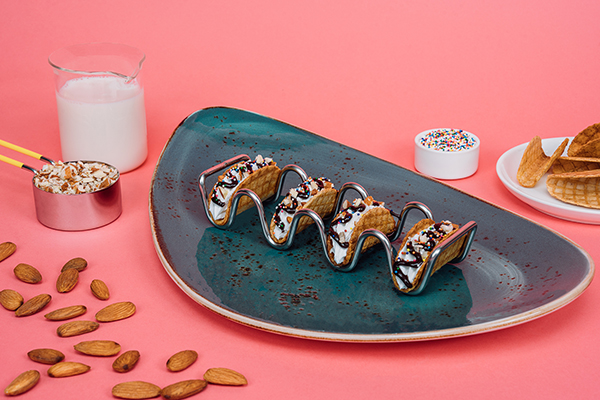
Chef Hill also offered his Almond-Stuffed Sundae Taco as an example of engaging a guest’s brain with surprise when they see what looks like a savory taco actually turns out to be a sweet sundae. “I wanted to surprise and delight the consumer,” he said. Beyond a look-alike-taco, the application also uses almond flour in the baked – not fried – toasted shell. “I wanted a sweet shell that also had structure, so I decided to bake it,” Hill explained.
The soft-serve overrun ice cream filler is made from almond milk and complemented with butter fudge syrup. “The treat is a surprise of simple and delicious ingredients. It is a cold, toasted, creamy, chocolate-flavor application,” he said. The multisensory visual surprise is capped off with colorful sprinkles. And, as Chef Hill notes, “Who doesn’t like sprinkles?”
Click here to read Part One, "Culinary Arts: Alchemy or Artistry? Yes to Both."
Photos courtesy of the Almond Board of California, California Avocado Commission, Mendocino Farms, Chef Daniel Pliska, Aneesha Hargrave, and First Hospitality’s Tiffany Swayer.