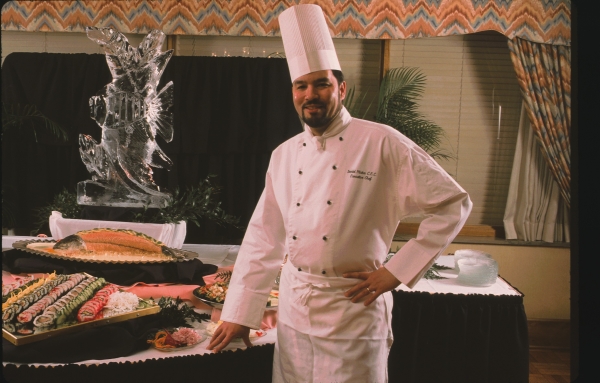
Mention Garde Manger to someone outside the culinary world and you may be met with a blank stare. Even in this era of celebrity chefs, ever-popular cooking shows and endless online tutorials, the culinary discipline of Garde Manger isn’t well known. At its simplest, Garde Manger refers to the art of preparing and presenting cold foods and the kitchen station where those dishes are created. In smaller kitchens, that area is typically known as the pantry.
There was a time when cold food skills and artistry were hallmarks of great chefs. Elaborate displays featuring classic techniques with aspic and chaud-froid showcased a chef’s technical skill and artistry. But, like many traditional culinary arts, Garde Manger skills have become somewhat of a lost art.
Yet the discipline is far from disappearing. In fact, many of its techniques are finding new life in modern kitchens. The popularity of charcuterie boards, elaborate sushi displays and contemporary tasting menus reflects Garde Manger’s continued influence. Chefs in top-rated white tablecloth restaurants also rely on traditional skills such as preparing forcemeats, curing, smoking and fermentation to create distinctive dishes.
At Ozarks Tech, where I teach Garde Manger, students learn these techniques across six essential categories: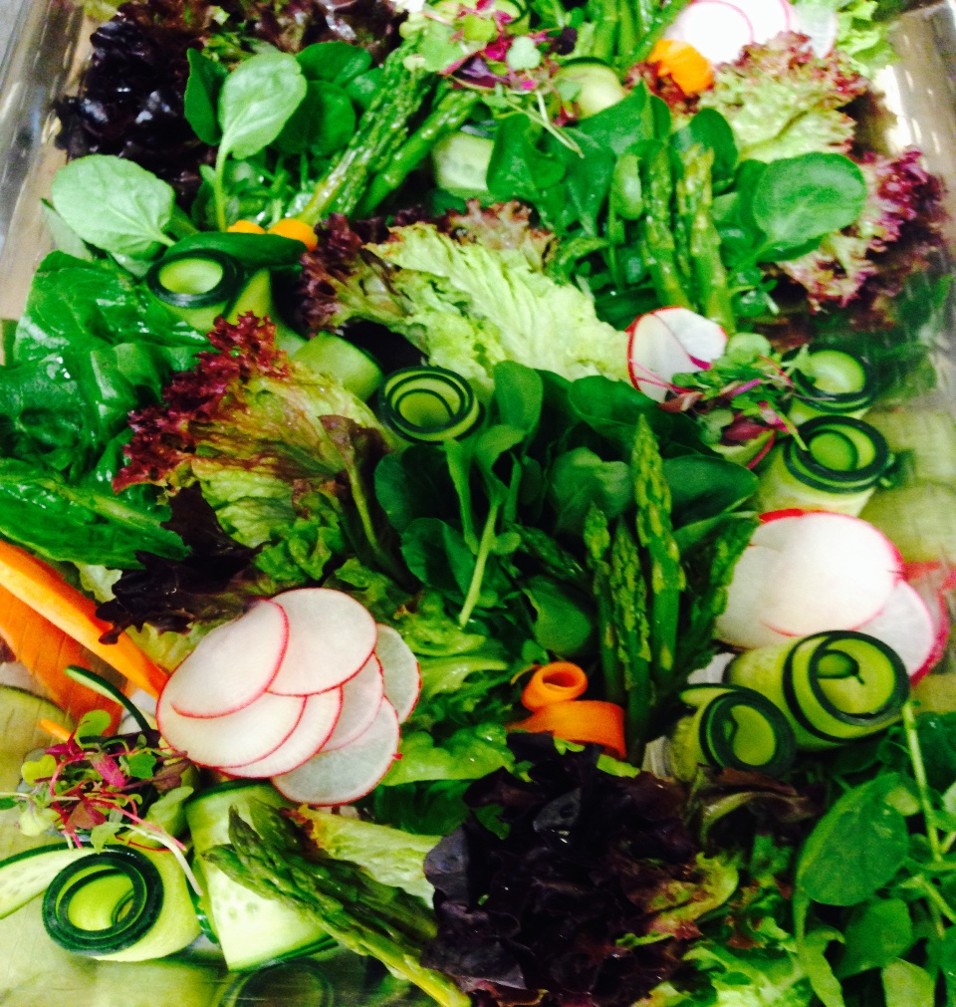
- Salads– Tossed, composed and bound
- Cold hors d’oeuvres and appetizers– Canapes and tea sandwiches
- Chilled seafood– Raw, cured, smoked, poached and grilled seafood, including sushi, ceviche, smoked salmon and shrimp cocktail
- Charcuterie– Pates, terrines, galantines, mousses, rillettes and sausages
- Cold food trays and platters– Crudités, fruit displays, cheese trays, cold cuts and deli platters
- Food art– Fruit and vegetable carving
Salads
Salads are among the most familiar examples of Garde Manger, but their preparation extends well beyond mixing greens with dressing. They generally fall into three sub-categories: tossed, composed and bound.
- Tossed saladsare perhaps the most recognizable. A classic green salad combines a variety of fresh greens lightly tossed with an oil-and-vinegar-based dressing.
- Composed saladsemphasize presentation. Rather than tossing ingredients together, the chef arranges them in a decorative manner, serving the finished salad with dressing drizzled over top or on the side.
- Bound saladsuse a dressing, often mayonnaise-based, to hold the ingredients together. Familiar examples include chicken or tuna salad. Bound salads can be served on a bed of greens, tucked into sandwiches or wraps, or presented as an hors d’oeuvre in single-bite servings presented on spoons or stuffed into various bases.
Cold hors d’oeuvres
Cold hors d’oeuvres are a cornerstone of Garde Manger, appearing at receptions, buffets, and cocktail parties as well as on tasting menus and amuse-bouches. This category encompasses a vast array of chilled foods served in many different styles.
This assortment might include tea-smoked duck canapes, country pate canapes, goat cheese sun-dried tomato tarts, smoked salmon crepe roulades, or choux puffs filled with curry chicken salad.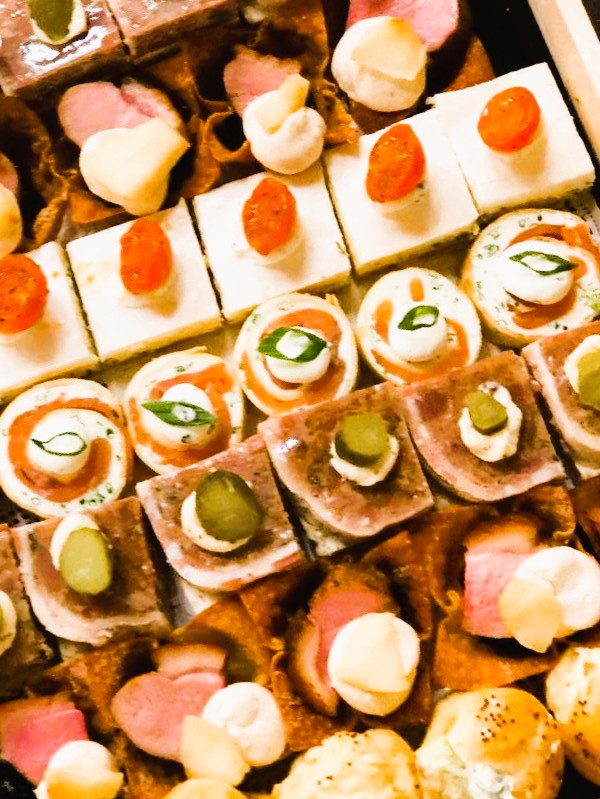
Canapes and tea sandwiches are among the most popular cold hors d’oeuvres and well suited for passed service, buffets and intimate gatherings like the classic tea party.
Canapes are normally built around three components in an equal one-third ratio. The base, which may be a croustade. The second layer is the spread, like compound butter. Finally, a main ingredient or garnish.
A well-executed canape should be made with delicious ingredients, but always delicate, precise in size and elegantly garnished.
Ideas for canape bases include:
- Buttery crisp croustades
- Tartlets
- Choux puffs
- Crisp wontons
- Puff pastry
- Vegetables
Next, top your base with a well-seasoned spread such as:
- Compound butter
- Herb cream cheese mixtures
And finally, complete the stack with a main ingredient such as: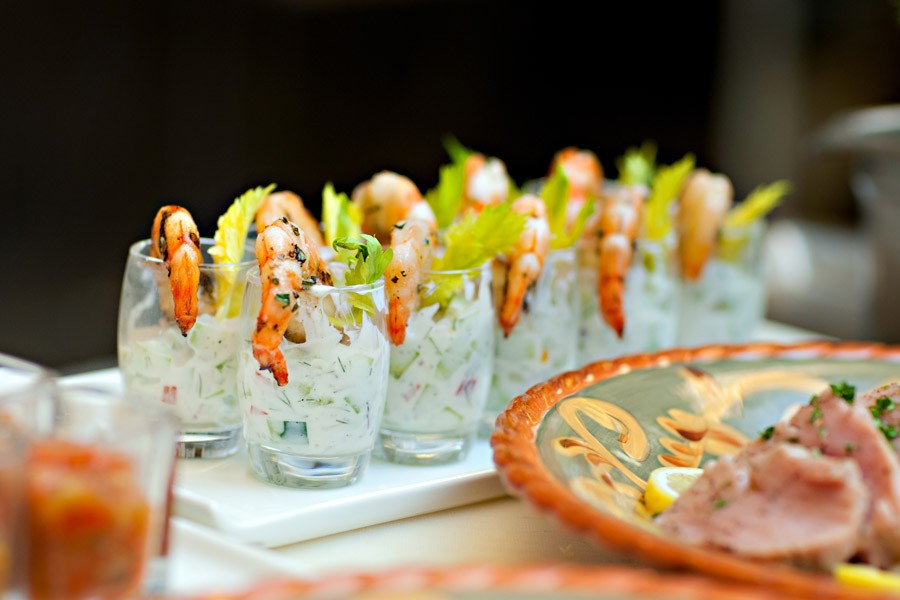
- Shrimp
- Smoked salmon
- Premium ham
- Beef tenderloin
- Scallops
- Lobster
- Caviar
- Marinated baby vegetables
Slightly larger than canapes, finger and tea sandwiches are typically two or three bites and traditionally prepared with fresh bread and flavorful fillings like chicken salad, ham salad, egg salad or watercress and cucumber.
Chilled Seafood
Seafood offers tremendous opportunities for chefs to demonstrate their Garde Manger skills through a variety of preparations, including smoking, curing, poaching and marinating.
The image below features a trio of chilled salmon with hot smoked salmon, gravlax and salmon/scallop terrine garnished with shrimp and bay scallops.
Pâtés and Terrines
Sometimes criticized as old-fashioned or passé, pâtés are enjoying a return to the limelight in nose-to-tail concept restaurants, artisan butcher shops and on charcuterie platters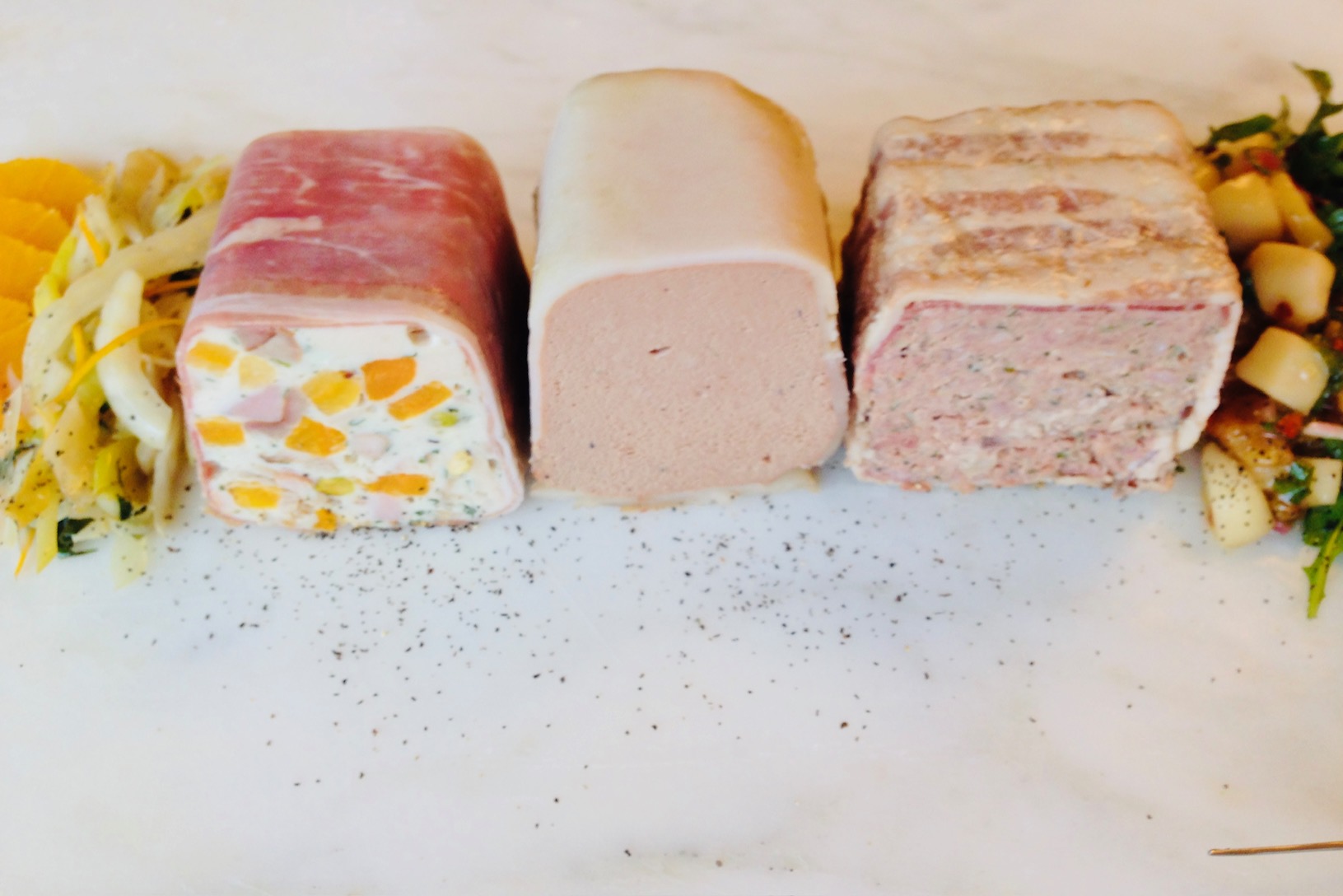 .
Pâtés and terrines are based on four classic forcemeats, or farce in French:
- Straight or basic forcemeat – A primary protein, often mixed with pork and veal, ground in progressive stages.
- Mousseline forcemeat – A very fine texture typically made with chicken or fish and emulsified with 50% cream.
- Country-style forcemeat (Campagne) – A coarsely ground mixture, commonly made with pork and liver, used in rustic pates and terrines.
- Gratin forcemeat – This version is prepared with some or all of the protein seared or cooked prior to being ground or pureed.
Of these, Mousseline forcemeat is the most popular, often used in refined hot dishes like stuffed ravioli, poultry, game and seafood.
Fruit and Vegetable Carving and Displays
Creating fruit and vegetable displays using clean and precise techniques has and always will elicit a wow factor at events. Creating an intricately carved centerpiece or thoughtfully composed platter requires patience and an eye for design. A few fundamentals make all the difference: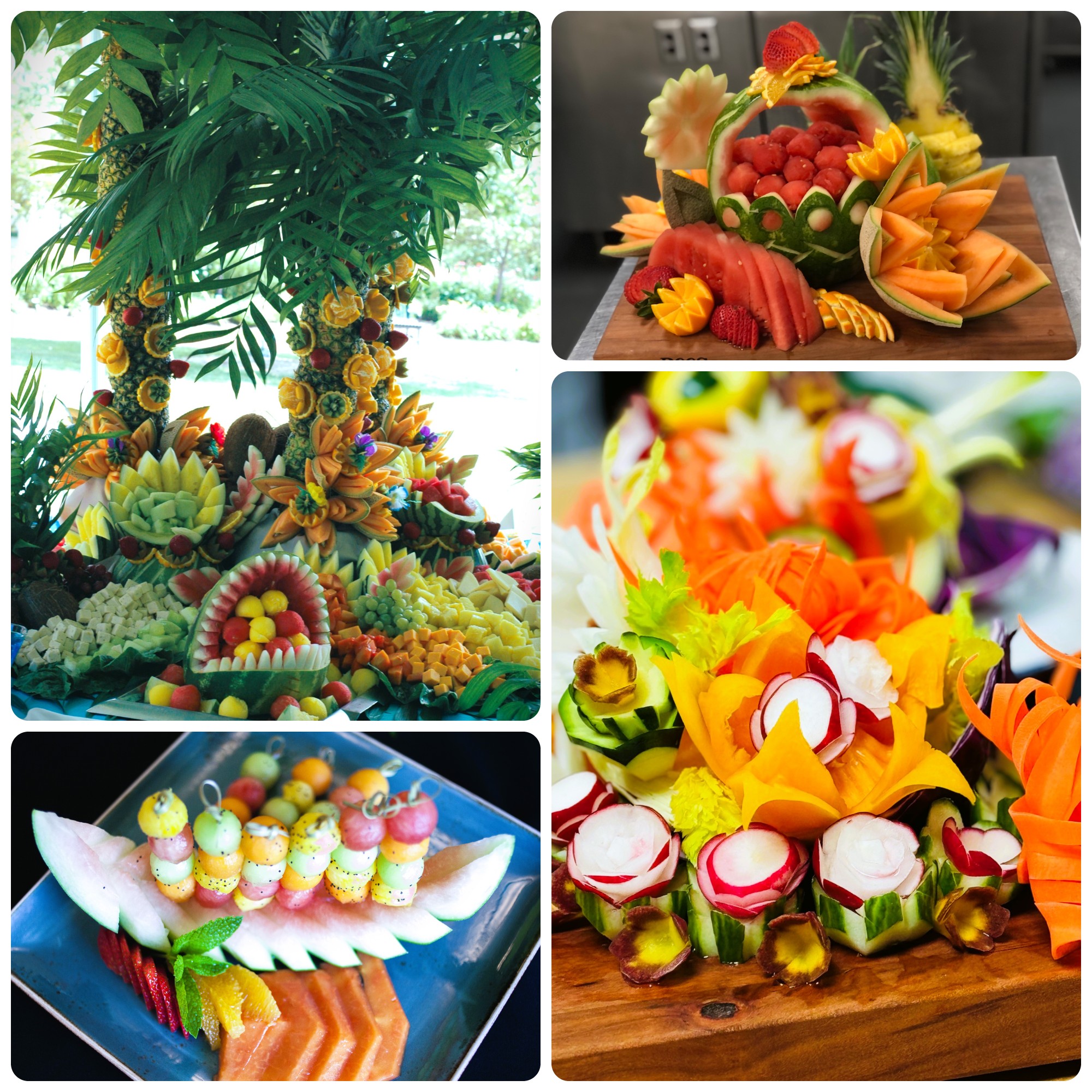
- Choose fresh, high-quality seasonal fruit and vegetables
- Master basic cutting and carving techniques
- Use quality tools like sharp knives and specialized carving tools
- Make sure garnishes complement the food they’re served with
- Arrange displays and trays with a careful eye toward color, height, flow and balance
Although Garde Manger may look different today than it did in the grand hotel kitchens of the past, its influence remains strong. Traditional techniques are evolving as chefs find creative new ways to apply them to contemporary dishes and presentations. From charcuterie boards and chilled seafood to intricate hors d’oeuvres and artistic displays, Garde Manger continues to play an important role in fine dining, hotels, private clubs and beyond.
For chefs willing to master its fundamentals, Garde Manger offers something that never goes out of style: the opportunity to combine technical skill, creativity and attention to detail into food that’s as memorable to look at as it is to eat.
Chef Daniel Pliska brings 49 years of distinguished culinary and pastry experience to the next generation of chefs as the Savory Chef Instructor at Ozarks Technical College in Springfield, Missouri. After decades of working in and leading prestigious kitchens across the U.S. and Europe, Chef Daniel now dedicates himself to shaping future culinary professionals through expert instruction, mentorship, and real-world insight.
Chef Pliska’s new website and blog, www.chefpliska.com, contains recommendations, articles, blog posts and links to past published articles, videos and podcasts. The site focuses on traditional cooking and pastry techniques.