
CIA’s Culinary Bible Turns 50
Saturday, 03 November 2012 21:55
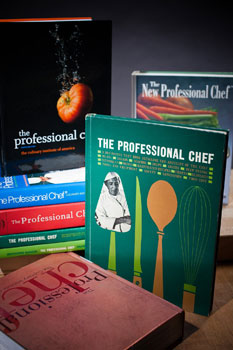 The Professional Chef continues to change the world of cooking.
The world was changing in 1962. John Glenn became the man to orbit the Earth and return home safely. The Beatles released their first single, “Love Me Do.” And The Culinary Institute of America (CIA) forever changed the culinary world with the publication of The Professional Chef®.
There had never been anything like it before. The Professional Chef was the first book dedicated to advancing the culinary profession. The 323-page text began by explaining that “knowing how to cook is only one part of the background a chef needs.” Chefs also needed to understand personnel, purchasing, nutrition, menu planning and kitchen layout. It was a guide for men—and it was almost exclusively men back then—who wanted to make a career of cooking: “Today’s chef is a business man … His knowledge and ability do not come overnight.”
Much more than a cookbook, its recipes and techniques were accompanied by sections about hygiene and sanitation, kitchen safety, tools and equipment, food cost, recipe conversions and even how to set up a buffet table. Recipes included Baked Hamburger Loaf, Chicken Cacciatore, Lobster Newburgh and molded salads—illustrated by stereotypical food photos of that era.
 Moti Mahal Delux, a legendary high-end restaurant chain that is responsible for the invention of tandoori chicken, operates more than 100 locations throughout India, Nepal and London. This year, chef Gaurav Anand, a native of Punjab, India, has opened the restaurant’s first U.S. location, bringing the flavorful cuisine of the Mughal Empire to Manhattan’s Upper East Side.
 Good practices of social-media conversation honor five key principles just as they do within teams and in kitchens.
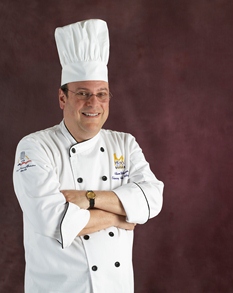 Easy, free and completely impartial, an assignment board guarantees that everyone shares equally in the assignments over a few days. Say these educators, the system is beautiful in its simplicity.
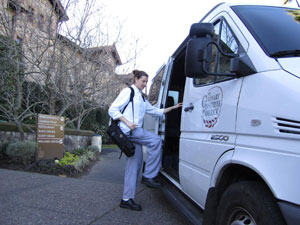 Produced for only $0.88 a gallon to operate the college’s vehicles, the savings from converting cooking oil to fuel rather than purchasing regular diesel is huge.